





Moeve took part in the 7th SECAT 2026 Young Scientists’ Congress, where LIFE Superbiodiesel project was presented. This scientific forum is a leading platform for presenting new solutions in catalysis and their application to current industrial challenges.
In this context, Marta Bregua, head of the LIFE Superbiodiesel project at Moeve, delivered a presentation entitled ‘From the laboratory to industrial reality: Scaling up catalytic innovation through public-private collaboration’, in which she outlined the company’s vision on technological innovation and the mechanisms that enable scientific knowledge to be transformed into high-impact industrial solutions.
During the presentation, the LIFE Superbiodiesel project was highlighted as an example of public-private collaboration, emphasising the impact that catalytic innovation generates when it brings together science, collaboration and industrial scaling. This participation forms part of the shared objective of moving towards more efficient and sustainable technologies, which will help drive the energy transition and contribute to European energy self-sufficiency.
From animal waste to advanced biodiesel
The project has demonstrated, on a pilot scale, the possibility of transforming SANDACH-3 waste feedstocks – which present significant technical challenges – into more sustainable, efficient and flexible biodiesel. To this end, it employs supercritical technologies and innovative heterogeneous catalysts.
This approach makes it possible to:
- utilise waste that has no alternative uses,
- improve the efficiency of the conversion process, and
- reduce the generation of by-products associated with conventional processes.
Catalysis: a key driver of innovation
Participation in SECAT 2026 has highlighted the role of catalysis as an enabling technology in the production of biofuels.
In the case of LIFE Superbiodiesel, heterogeneous catalysts accelerate the conversion of fats and oils into biodiesel, broadening the range of feedstocks and improving process efficiency, as detailed in the project’s technical report.
Impact on the energy transition
The project focuses not only on the production of biofuels, but also on their contribution to the circular economy and to reducing the environmental impact associated with waste.
Key validated results include:
- a significant reduction in the carbon footprint compared to fossil diesel,
- improved resource efficiency, and
- the utilisation of by-products in new value chains, such as biostimulants.
Looking to the future
Following validation at pilot scale, LIFE Superbiodiesel is moving into new phases focused on scaling up the process, optimising raw materials and assessing its industrial viability.
Events such as SECAT 2026 reinforce the role of catalysis as a bridge between research and industry, accelerating the development of real-world solutions for the transition to more sustainable energy models.
LIFE Superbiodiesel: turning waste into energy, driving innovation in catalysis
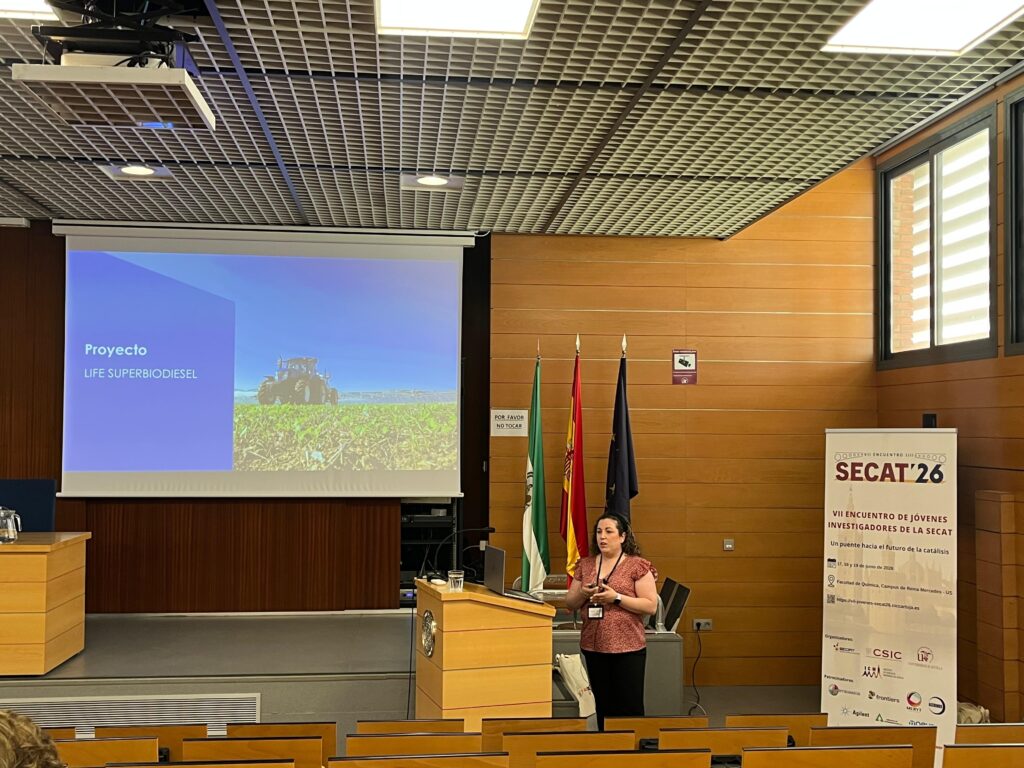
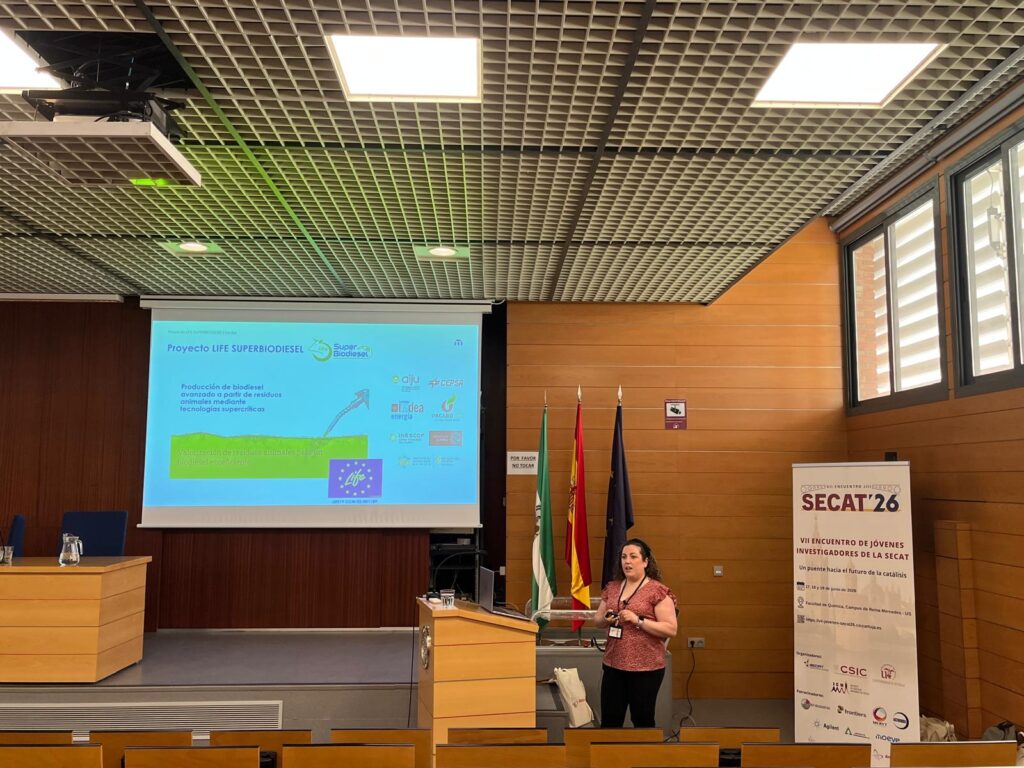
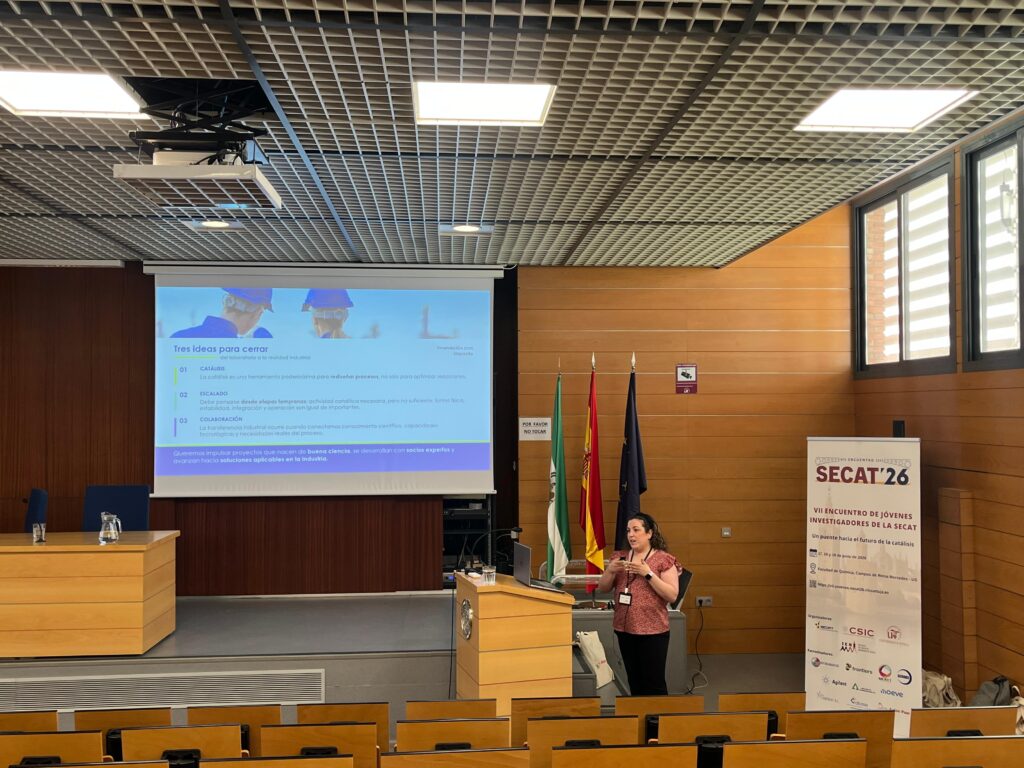
Snapshots of Moeve’s presentation at SECAT 2026
Comments are closed.